How to Use a Stihl Weed Eater
Start the trimmer upright with the cutting head clear of the ground, warm it up at part throttle, then trim with the head tipped so only the line tip cuts. Feed the line as it wears, sweep away from fences and foundations, and stop the engine before you clear a jam.
On this page (8 sections)
- How do you start a Stihl weed eater safely?
- How do you hold and move the trimmer when trimming?
- How do you load and feed the line?
- How do you trim along fences, foundations and trees?
- How do you edge a lawn and clean up borders?
- What should you do before and after each session?
- How do you store a Stihl weed eater between jobs?
- Putting it all together
Start the trimmer upright with the cutting head clear of the ground, warm it up at part throttle, then trim with the head tipped so only the line tip cuts. Feed the line as it wears, sweep away from fences and foundations, and stop the engine before you clear a jam.
Knowing how to use a Stihl weed eater comes down to a safe start and a light touch. The machine does the work when the head is held at the right angle, so most of this guide is about position rather than power.
How do you start a Stihl weed eater safely?
Place the trimmer on level ground, set the choke, and pull the starter with the machine braced. A gas Stihl trimmer starts easier when the head is clear of grass and the machine cannot tip toward you.
Clear loose stones and toys from the work area first, and put on eye protection, long trousers and closed shoes. A spinning line throws debris further than most people expect.
Set the stop switch to run and move the choke lever to its cold-start position. Press the primer bulb several times if your model has one, then brace the trimmer with one hand on the housing and pull the starter cord in a steady stroke.
Let the engine run at part throttle for a short warm-up before you squeeze the trigger to full speed. Cold oil and a cold cylinder need a gentle start, and this habit also keeps the engine from stalling when you tilt the head.
How do you hold and move the trimmer when trimming?
Hold the trimmer at a slight angle with the cutting head tipped down and away from you. Stand upright, keep the shaft across your body, and move in steady sweeps rather than pushing into the grass.
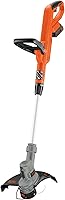
A straight-shaft trimmer like the Husqvarna 122LK puts the engine behind you, so the head reaches under bushes and along fences without the housing blocking the view. Its 22-cc two-cycle engine is built for light, occasional yard work, and the Smart Start recoil system is designed to make starts quick with less pull effort.
Keep the head level with the ground or tipped a few degrees so the line meets the tips of the grass. Sweep side to side at a walking pace and let the line travel forward into the next pass.
If you lean in or press down, the head scalps the lawn and the spool drags.
How do you load and feed the line?
Wind the line onto the spool evenly, leave the right tail length, and bump the head to feed more as it wears. A tight, uncrossed wind is what keeps the line feeding smoothly.
Line snaps most often when it is wound loosely or when the strands cross each other on the spool. Feed the ends through the eyelets in the head, then bump the head lightly on the ground while the engine runs to advance more line.
Match the line diameter to your trimmer head. Heavy line gives you longer reach in thick growth, but it also puts more load on the engine and burns through fuel faster.
Check the head's stated capacity before changing size.
How do you trim along fences, foundations and trees?
Slow down near solid objects and use the very tip of the line. The line spins at full speed, so the tip removes grass close to a wall without the head banging against it.
Approach a fence or foundation at a shallow angle and sweep away from the structure rather than into it. The same rule works around tree trunks, posts and garden borders.
A straight-shaft trimmer helps here because the head reaches flat along the base of a fence.
Keep the guard in place, because it stops clippings from packing around the spool and keeps debris from flying at your legs. Don't use the trimmer to cut thick stems or saplings; string heads are not built for woody growth.
How do you edge a lawn and clean up borders?
Tip the head so the line runs along the lawn edge and walk forward at a steady pace. This gives you a straight border without digging a trench.
Hold the trimmer with the cutting head tipped about 90 degrees so the line runs vertically along the edge of the grass. Walk forward slowly and keep your shoulders relaxed.
A light first pass takes the bulk off, and a second pass tidies the line.
For beds and gravel strips, lower the head slightly and sweep the clippings away from the lawn so they don't smother the edge. Blow or rake the border afterward, because the trimmer leaves cuttings lying where they fall.
If edging is a regular job for you, a straight-shaft trimmer is easier to hold at that angle than a curved-shaft model. Our guide to how to choose a weed eater compares shaft types and power sources before you buy.
Which string lines suit everyday Stihl trimming?
Choose the line that matches your head, your engine size and the kind of growth you cut. For a light gas trimmer like the Husqvarna 122LK, a 0.080-inch line is a sensible everyday size for lawn edges and fence lines.
The Dewalt Trimmer LINE comes as a 225-foot spool in 0.080-inch size. That length covers several spool refills, so you can keep a spare wound and ready between jobs.
The EGO Power+ Twisted String Trimmer Lines are pre-cut 0.095-inch strands in a 5-pack. They are built for EGO string trimmers and the EGO multi-head 15-inch trimmer attachment, so they are the choice if your Stihl sits alongside an EGO machine in the garage.
The heavier twisted line holds up in tough growth and feeds cleanly when the spool is wound tight.
Check the line size against your trimmer head before you load it. A line that's too heavy for the head jams or slips, and a line that's too light breaks under load.
What should you do before and after each session?
Walk the area for hazards, check the line and shield, and clear the head after you stop the engine. A few minutes at each end of the job prevents most problems.
Before you start, remove sticks and wire from the lawn and check that the shield is fitted. Pull the line out to the correct length and make sure the spool cap is tight.
Check the air filter and fuel level on a gas trimmer as part of the same routine.
After you stop the engine and let it cool, wipe grass from the head and shield. Winding a spare spool before the next session saves time when the line runs out.
Our guide to how to properly use a weed eater covers general trimming technique in more detail. For battery models, compare options in our cordless weed eater shortlist.
How do you store a Stihl weed eater between jobs?
Empty or stabilize the fuel, clean the head and shield, and hang the trimmer upright in a dry spot. Fuel left in a two-cycle engine for months can gum up the carburetor.
Run the engine until it stops on its own if you won't use it for a while, or follow the fuel guidance for your model. Wipe the shaft and head clean and check the line for nicks.
Store the trimmer off the floor so the cutting head isn't resting on concrete.
Our guide to how to store weed eater in garage covers hanging positions and fuel handling in detail. A dry, ventilated spot out of reach of children is the basic rule.
Putting it all together
Using a Stihl weed eater well is mostly about a safe start, a light touch and a clean head. Start upright, warm up at part throttle, and trim with only the line tip cutting.
Feed the line as it wears, sweep away from fences and foundations, and edge by tipping the head so the line runs along the lawn border.
For most home lawns, a light straight-shaft gas trimmer like the Husqvarna 122LK handles edges, fences and under-shrub work without much effort. Pick a line size your head accepts: 0.080-inch for light gas trimmers and 0.095-inch twisted line for EGO machines.
Keep a spare spool wound, clear the head after every session, and the trimmer will start easily the next time you reach for it.
Frequently asked questions
What fuel mix does a Stihl weed eater need?
Stihl gas trimmers run on a mix of regular gasoline and two-cycle engine oil, not straight gas. Check your model's decal for the exact ratio before filling, and mix only what you can use in about a month so the fuel stays fresh.
How do I stop the line from breaking so often?
Line usually snaps when it is too thin for the work or when you force the head into dense growth. Let the tip do the cutting, keep the spool wound tight without crossing the strands, and move up to a heavier line only if your trimmer head accepts it.
Can I cut wet grass with a gas trimmer?
You can, but wet grass clumps around the head and shield and dulls the cutting action. Wait for a dry stretch when you can, and keep the guard in place so clippings do not pack against the spool.
How do I edge a lawn with a string trimmer?
Tip the head so the line runs along the edge of the lawn and walk the trimmer forward at a steady pace. A straight-shaft trimmer like the Husqvarna 122LK makes this easier because the shaft reaches flat along the border without the engine blocking your view.
Should the trimmer head touch the ground?
No. Hold the head so the line meets the grass at or just above the height you want, and let the spinning tip cut.
Resting the head on the ground drags the spool, scalps the lawn and wears the line down fast.