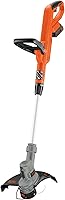
String Trimmer vs Edger: What Is the Difference?
A string trimmer cuts grass and weeds down to a flat height, while an edger cuts a clean vertical line where lawn meets a path or garden bed. A 2-in-1 tool does both jobs with one motor, so you don't need two machines.
On this page (6 sections)
A string trimmer cuts grass and weeds to an even height across a wide area. An edger cuts a crisp vertical border where the lawn meets a path, driveway or garden bed.
The main difference between a string trimmer and an edger comes down to the angle of the cutting head and the job it does.
Most cordless tools sold today combine the two. A 2-in-1 model flips its head from flat to upright, so one motor, one battery and one spot in the garage cover both jobs.
What does a string trimmer do that an edger can't?
A string trimmer cuts a broad swath of grass flat, so it handles the areas a mower can't reach. The spinning line sits parallel to the ground and slices weeds, tall grass and overgrowth down to a level height.
That flat cut makes it the tool for fence lines, tree rings, mailbox posts, retaining walls and the strip next to a foundation. A 12-inch cutting width clears a lot of grass in one pass.
Because the head stays level, the trimmer also works on slopes and rough ground where a mower would struggle.
An edger can't do this. Its head points down, so it cuts a narrow slot rather than a wide swath.
If you tried to clear a patch of tall weeds with an edger, you'd cut one thin line at a time. The WORX WG163 runs its line at a 0.065 inch diameter across a 10-inch cutting line length, and the head spins at 7600 rpm no-load speed.
That combination covers ground quickly at a flat angle.
To see the full list of jobs a trimmer handles, read what a string trimmer is used for. A trimmer is the general-purpose tool; the edger is the specialist.
What does an edger do that a string trimmer can't?
An edger cuts a straight vertical border along pavement and beds. The line or blade stands upright and slices a clean trench where grass creeps over a sidewalk or into mulch.
That straight cut is what gives a lawn its finished look. A trimmer held flat leaves a ragged edge where grass flops over the concrete.
An edger cuts down through that overhang and leaves a sharp line the whole way along the path.
The tool also keeps the cut consistent. Guide wheels or a spacer guard rest on the hard surface and hold the head at the right depth.
Rubberized wheels support and guide the edger, which gives straighter lines and cleaner cuts. A flat trimmer has no such reference point, so the border wanders.
The trade-off is coverage. An edger is slow over open grass because it only cuts a narrow strip.
Use it for the borders, not the whole yard.
What is a 2-in-1 trimmer and edger?
A 2-in-1 trimmer and edger is one tool that changes the cutting head angle so it can trim flat or edge upright. You don't buy two machines or store two batteries.
The conversion is usually quick. The WORX WG163 changes from a string trimmer to an edger in seconds, and its head tilts 90° for the edging position.
Both BLACK+DECKER models here convert from trimmer to edger in seconds as well.
The shared battery is the other benefit. A 20V pack runs the trimmer, the edger and often other tools in the same family.
WORX Power Share batteries work across all WORX 20V and 40V tools. BLACK+DECKER's 20V MAX batteries swap between its 20V MAX tools.
That shared platform matters when you're buying your first cordless tool. One battery and charger serve several jobs, and the light weight keeps the tool easy to handle.
Our guide to how much a string trimmer weighs explains why a 5–6 lb cordless model is comfortable for most yards.
Best for most yards: WORX WG163 20V 2-in-1 Trimmer and Edger
The WORX WG163 is the pick for most people because it covers both jobs in one light tool. Its 12-inch cutting width and 5.5 lb weight keep trimming easy, and the head tilts 90° for edging and slopes.
The Command Feed spool gives you line at the press of a button, so you don't stop to bump the head. An adjustable spacer guard protects flowers and lawn ornaments, and the rubberized wheels hold the edger steady along a path.
It comes with two 20V batteries and a charger, so one pack can charge while the other runs. The kit also includes the trimmer spool, support wheels and safety guard, so you can set it up for either job right out of the box.
Best for tough overgrowth: BLACK+DECKER 20V MAX 2-in-1 Trimmer and Edger
The BLACK+DECKER LST300 suits yards with heavier weeds because its POWERDRIVE transmission pushes more power from the motor to the cutting string. It runs at 6200 rpm and has a 12-inch cutting swath.
The 5.7 lb body stays light enough to carry around the yard, and the steel deck helps it stand up to regular use.
The Automatic Feed Spool feeds line without bumping, and the tool converts from trimmer to edger in seconds. A 2.0 Ah battery is included and runs longer than BLACK+DECKER's previous pack.
Adjustable handle and height positions let you set it for comfort. The kit includes a charger and a wall mountable charging base, so the battery is ready when you grab the tool.
Best for long runtimes: BLACK+DECKER 20V MAX LSTE525 Trimmer and Edger
The LSTE525 is the choice when you want to finish a big yard on one charge. It ships with two batteries for double the runtime, and its 2-speed control lets you boost power or stretch the charge.
The 12-inch cutting width matches the other two models, so you aren't trading coverage for battery life.
EASYFEED advances the line with a push of a button, so no bumping is needed. It converts from trimmer to wheeled edger and runs at 7200 rpm.
The premium micro texture grip and adjustable height help keep it comfortable during longer sessions. At 5.3 lb it is the lightest of the three, which helps when you carry it along a long border.
For a lighter option in the same battery family, compare the best 20V string trimmers.
When is a separate edger worth the extra money?
A separate edger is worth it when you want a deeper, blade-cut trench along long driveways or a crisper line than a string tool gives. A dedicated wheeled edger with a metal blade digs a sharper groove and holds depth more consistently on long runs.
That suits large properties with long stretches of pavement and buyers who edge more often than they trim. The separate tool also lets you edge without changing a head back and forth all afternoon.
For most homes, though, the extra machine adds cost and storage without much gain. A 2-in-1 string edger handles normal borders, sidewalk overhang and bed edges well.
The money is usually better spent on a trimmer with a good line feed and a spare battery.
How do you choose between them for your yard?
Start with the size of your lawn and how much hard edge it has. A 2-in-1 trimmer and edger is the right first tool for almost every yard, and a separate edger only makes sense for long driveways or professional-looking borders.
Use these rules:
- Pick a 2-in-1 if your yard is a normal suburban lot with fences, trees and a sidewalk.
- Pick a separate edger only if you have long pavement runs and want the crispest trench.
- Pick a cordless tool if you want quiet starts and no gas cans; all three models here run on 20V batteries.
- Pick a lighter model if you trim for long stretches or carry the tool up steps.
Weight and balance matter as much as power. A 12-inch head on a 5.5 lb tool covers ground quickly without tiring your arms.
Compare the three by weight: the WORX WG163 and BLACK+DECKER LST300 sit within a few ounces of each other, while the LSTE525 is the lightest. Our string trimmer buying guide walks through power, weight and line choices in more detail.
Which should you buy first?
Buy a 2-in-1 string trimmer and edger first. It handles the wide trimming jobs a mower misses and switches to edge the borders, so one purchase covers both tasks.
The WORX WG163 is the best all-round pick for most readers. Choose the BLACK+DECKER LST300 if thick overgrowth is your main problem.
Pick the LSTE525 if you have a large yard and want two batteries and two speeds.
Add a separate edger later only if you want a deeper trench along long pavement. For most homes, the difference between a string trimmer and an edger is a head angle, not a second machine.
Learn the basics in what a string trimmer is used for, then check weight and line setup in our string trimmer buying guide before you order.
Frequently asked questions
What is the difference between a string trimmer and an edger?
A string trimmer holds its cutting line flat so it can shorten grass and weeds to an even height. An edger turns the cutting line or a blade upright so it slices a clean border where grass meets pavement or a flower bed.
Many cordless tools now switch between both modes.
Can one tool do both trimming and edging?
Yes. A 2-in-1 trimmer and edger rotates its head or swaps an attachment so the same motor handles both jobs.
The WORX WG163 and both BLACK+DECKER models here convert in seconds, which saves storage space and the cost of a second machine.
Do I still need a separate edger?
Only if you want a deeper, blade-cut trench along long driveways. A string edger handles normal borders and overgrowth around beds well.
A dedicated wheeled edger with a metal blade suits large properties and buyers who want crisper lines with less effort.
Is a string trimmer or an edger better for a small yard?
A 2-in-1 string trimmer and edger covers a small yard best. One light tool trims around fences and trees and then edges the sidewalk.
A separate edger adds cost, storage and weight you may not need on a quarter-acre lot.
How do you edge a lawn with a string trimmer?
Flip the head to the edger position, rest the guide wheel or guard on the pavement, and walk slowly along the edge so the line cuts straight down. Keep the line short and the tool light so the cut stays even along the whole border.