What Type of Extension Cord for a Weed Wacker?
Use a heavy-duty outdoor extension cord with 12 or 14 gauge wire and an SJTW jacket for a corded weed wacker. It must be rated for the trimmer's amps, plugged into a GFCI outlet, and kept out of standing water.
On this page (9 sections)
- What type of extension cord does a corded weed wacker need?
- What gauge extension cord for weed wacker should you pick?
- How many amps does a corded weed wacker draw?
- Which jacket and plug type should you look for?
- Why does a GFCI matter with a weed wacker?
- How do you keep the cord safe while trimming?
- Is a battery trimmer easier than dealing with a cord?
- What else should you keep on hand for a corded trimmer?
- Which extension cord setup should you buy?
Use a heavy-duty outdoor extension cord with 12 or 14 gauge wire and an SJTW jacket for a corded weed wacker. The cord must match the trimmer's amp rating, plug into a GFCI outlet, and stay clear of standing water.
Getting the type of extension cord for a weed wacker right comes down to four things: gauge, amp rating, jacket and safety. The rest of this guide covers each one so you can grab the right cord on the first trip.
What type of extension cord does a corded weed wacker need?
An outdoor-rated cord with 12 or 14 gauge wire and an SJTW or SJTOW jacket is the right type. Those cords are built for wet grass, sun and dragging across driveways.
The gauge is the wire thickness. Lower numbers mean thicker wire.
A 12 gauge cord carries more current with less voltage drop than a 14 gauge cord of the same length.
The jacket letters matter just as much. The "W" means the cord is rated for outdoor use.
A plain "S" or "SJ" cord is for indoor work and its jacket won't hold up to moisture and sunlight.
Length matters too. The longer the cord, the more voltage the wire loses before it reaches the trimmer.
That's why a long run needs thicker wire, not just a longer version of the same cord.
What gauge extension cord for weed wacker should you pick?
Pick 14 gauge for runs up to about 50 feet and 12 gauge for longer runs or a high-amp trimmer. Most corded weed wackers draw 6 to 12 amps at 120 volts, so a 14 gauge cord covers a short run.
Voltage drop is the reason. A 14 gauge cord loses more voltage per foot than a 12 gauge cord.
Over 100 feet, that loss can make the motor bog down in thick grass and feel weak.
Check the label on the trimmer for its amp draw before you buy. If the trimmer sits near the top of the 6 to 12 amp range, step up to 12 gauge even for a medium run.
Here's a simple table to match cord length to gauge:
| Cord length | Gauge for a trimmer up to 12 amps |
|---|---|
| Up to 25 ft | 14 gauge |
| 25 to 50 ft | 14 gauge |
| 50 to 100 ft | 12 gauge |
| Over 100 ft | 12 gauge |
Stay within the length the cord is rated for. Joining two short cords adds another connection point and more voltage loss.
How many amps does a corded weed wacker draw?
Most corded string trimmers draw between 6 and 12 amps at 120 volts. The exact figure is printed on the trimmer's label or in its manual.
The amp rating tells you how much current the cord must carry without overheating. A cord rated for 13 amps or more handles any typical weed wacker.
Don't run a 10 amp trimmer on a light 16 gauge cord just because it fits the plug. The wire gets warm, voltage sags, and the motor works harder than it should.
If your trimmer's label is worn off, the manual or the maker's website lists the amps. Write the number down and keep it with the cord so you don't have to look it up again.
Which jacket and plug type should you look for?
Look for an SJTW or SJTOW jacket, a three-prong plug and a molded end. These details separate a cord that survives a season in the yard from one that splits after a few weeks.
The "W" in the jacket code is the key letter. It marks the cord as outdoor rated for water and sunlight.
An indoor cord's jacket cracks in the sun and soaks up water.
A three-prong plug gives you a ground connection. Pair it with a GFCI outlet for the safest setup.
Never cut the ground pin off to fit an old outlet.
Molded ends resist pulling apart when you drag the cord around corners. A lighted end also helps you see when the cord is live.
Why does a GFCI matter with a weed wacker?
A GFCI outlet or in-line adapter cuts power within a fraction of a second if current leaks toward water or ground. Trimmers run next to wet grass, hoses and downspouts, so the risk is real.
Plug the extension cord into a GFCI outlet whenever one is available. If your outdoor outlet isn't protected, an in-line GFCI adapter at the outlet end adds the same protection.
Never plug a trimmer into a wet cord or a socket with water nearby. Dry the plug and the outlet before connecting anything.
Keep the connection point off the ground. A cord connector resting in damp grass is where water gets in.
A cord reel or a hook on a fence post keeps it dry.
How do you keep the cord safe while trimming?
Run the cord behind you and away from the cutting head, and never trim over it. A trimmer line spins fast enough to slice through a cord's jacket in one pass.
Start at the point farthest from the outlet and work back toward it. That way the cord trails behind you instead of lying in the grass ahead.
Keep the cord on the driveway or a trimmed strip when you can. Long grass hides the cord and makes it easy to cut.
Check the cord for nicks after each session. A damaged jacket lets moisture reach the wire and turns a small cut into a shock risk.
Replace any cord with exposed wire.
Is a battery trimmer easier than dealing with a cord?
A battery trimmer removes the cord and the outlet entirely, which is why many homeowners switch. You trade the cord for a battery, a charger and a runtime limit.
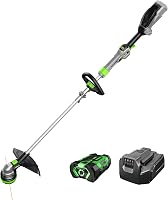
The BLACK+DECKER 40V MAX LST136 runs on a 40V Max lithium ion battery and has a PowerCommand dial for max power or max runtime. Its fast charger restores full power in 2 hours or less.
If you want to compare runtimes and charging times before switching, our guide to how long to charge a weed eater battery covers what to expect. And if you're weighing a corded trimmer against gas and battery options, string trimmer gas vs battery lays out the trade-offs.
What else should you keep on hand for a corded trimmer?
Spare trimmer line and a cord reel are the two supplies that matter most. Line wears out fast against fences and pavement, and a reel keeps the cord tidy and off wet ground.
Line diameter has to match the trimmer head. A 0.080-inch line suits many light and medium trimmers, while a 0.095-inch line fits heads built for the thicker size.
The Dewalt DWO1DT802 is a 225-foot spool of 0.080-inch line. That's a long supply for a homeowner who trims a few times a month.
The EGO Power+ AL2420P is a five-pack of pre-cut 0.095-inch twisted line for EGO POWER+ string trimmers and the multi-head 15-inch string trimmer attachment. It's a match for EGO heads designed for 0.095-inch line.
For a trimmer that chews through heavy brush, a thicker line and a more powerful machine both help. Our roundup of the best weed wacker for heavy brush covers trimmers built for that job.
Which extension cord setup should you buy?
Buy a 12 gauge outdoor SJTW cord at the length you need, plus an in-line GFCI if your outlet isn't protected. That combination handles a typical weed wacker and keeps the setup safe near wet grass.
If your outlet is close and your trimmer draws under 12 amps, a 14 gauge cord up to 50 feet works fine. For a long yard or a high-amp trimmer, spend the extra on 12 gauge wire.
Skip indoor cords, light 16 gauge cords and any cord with a cut or cracked jacket. None of them belong near a trimmer and wet grass.
Match the cord to the trimmer's amp rating, keep the connection dry, and run the cord behind you. That's the whole answer to what type of extension cord for weed wacker you need.
If the cord work feels like too much, a battery trimmer is the cleaner path; our guide to the 40v vs 20v trimmer helps you size the battery to your yard.
Frequently asked questions
Can I use a regular indoor extension cord for a weed wacker?
No. Indoor cords have thinner wire and jackets that aren't made for wet grass, sun or dragging across pavement.
Use an outdoor-rated cord so the insulation holds up and the voltage doesn't sag over a long run.
How many amps does a corded weed wacker draw?
Most corded string trimmers draw between 6 and 12 amps at 120 volts. Check the label on your trimmer or its manual for the exact figure, then match it to the cord's amp rating.
Should I buy a 12 gauge or 14 gauge cord for a long yard?
Pick 12 gauge when the run from the outlet to the trimming area is longer than about 50 feet. The thicker wire keeps voltage steadier, so the motor holds its speed through thick grass.