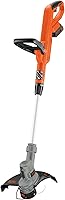
How to Repair a WORX String Trimmer
To repair a WORX string trimmer, start with the parts you can swap yourself: the line, spool, spool cap and guard. Most no-start or weak-cut problems trace back to the battery, the feed system or a blocked head, not the motor.
On this page (8 sections)
- What should you check first when a WORX trimmer won't start?
- How do you fix a WORX trimmer that won't feed line?
- What causes a WORX trimmer to stop cutting well?
- How do you replace the spool, cap and line on a WORX trimmer?
- How do you fix a wobbly or bent trimmer head?
- How do you handle battery and charger faults?
- What maintenance prevents the next repair?
- When should you replace the trimmer instead of repairing it?
To repair a WORX string trimmer, start with the parts you can swap yourself: the line, spool, spool cap and guard. Most no-start or weak-cut problems trace back to the battery, the feed system or a blocked head, not the motor.
Work through those basics before you think about a new trimmer. The sections below follow the order a repair actually takes, from the simplest fix to the ones that mean a call to WORX.
What should you check first when a WORX trimmer won't start?
Check the battery before anything else. A 20V pack that's flat, not fully seated or too cold to deliver current is the most common reason a cordless trimmer won't spin.
Pull the battery out and press it back in until it clicks. Charge it fully on the supplied charger and try again.
If you own more than one pack, swap them: a battery that works in another WORX Power Share tool is fine, while a pack that fails in both is the problem.
Cold weather matters too. A lithium pack left in a shed overnight loses usable charge, so let it warm indoors before you judge it.
Once the battery checks out, the trigger and the motor are the next suspects, and those are not home repairs.
The WG163 kit includes two 20V batteries and a charger, so a single dead pack rarely stops you. If both packs behave the same way in the trimmer but run fine in another Power Share tool, the fault sits in the trimmer's trigger or wiring.
That's the point to stop and contact WORX rather than keep swapping parts.
How do you fix a WORX trimmer that won't feed line?
Clear the spool and the eyelets first, because a jam stops the feed before the motor ever struggles. Most feed failures come from line welded to itself, grass packed under the cap or line crossed on the spool.
Unclip the spool cap and lift out the spool. Pull a few inches of line free by hand and check that it slides easily.
If it drags, the line is bound inside the coil or the eyelet is choked with clippings.
Clean the eyelets with a stiff brush and rinse the head. Then reload the spool so the line sits in even layers without crossing over itself.
The full method is in our guide to how to properly string a string trimmer.
The WG163 uses a push button feed: press the button and the head releases line. If the button feels stiff or the feed stalls even with a clean spool, the feed mechanism itself needs replacing.
WORX also supplies free spools for the life of the trimmer, so a worn or cracked spool is a no-cost part to try before you suspect anything bigger.
What causes a WORX trimmer to stop cutting well?
Line that's too short, too thin or worn down leaves grass standing, and that looks like a power fault when it's really a line problem. Check the cutting length before you blame the motor.
The WG163 runs a 10 in cutting line at 0.065 in diameter. Line worn below that size whips weakly and won't slice cleanly.
A spool that's almost empty also leaves too little line out to reach the grass.
Dull or glazed line cuts poorly even when it's the right size. Fresh line on a properly loaded spool restores a clean cut more often than any other single fix.
If the head turns slowly even with new line and a full battery, the motor or gearing is worn. That's a workshop job, not a driveway fix.
The WG163 runs at 7600 rpm no load, so a healthy unit sounds fast and even. A head that labours or bogs down in light grass is telling you the drive is tired, not that the line needs changing again.
How do you replace the spool, cap and line on a WORX trimmer?
Buy the right parts and the swap takes minutes. WORX sells spools for the WG163, and the trimmer ships with a spool and a Command Feed system.
To replace the spool, remove the battery, turn the trimmer over and press the release on the cap. Lift the old spool out, fit the new one so the line exits through the eyelet, then press the cap back on until it clicks.
Feed about 4 in of line out by hand and test the button feed with the trimmer off the ground. If the line still won't release, the cap isn't seated fully.
The kit also includes spool caps among its spare parts, so a cap whose tabs have worn smooth is easy to swap rather than fight with.
Which trimmer line works as a replacement?
DEWALT's line comes in a 225 ft spool at 0.080 in. That size suits heads built for 0.080 in line.
The WG163 takes 0.065 in line, so this spool is the wrong diameter for that trimmer and will jam the feed.
EGO's pre-cut line is 0.095 in and comes in a 5-pack of 14 ft lengths. It's built for EGO POWER+ trimmers and heads designed for 0.095 in line.
Like the DEWALT spool, it's too thick for the WG163.
The honest answer for a WORX trimmer is to match the head: 0.065 in line for the WG163. Check the diameter stamped on the spool cap before you order anything thicker.
The WG163's 10 in cutting line length also means you don't need much line per load, so a small spool of the correct 0.065 in size goes a long way.
How do you fix a wobbly or bent trimmer head?
A head that wobbles usually has a loose cap or a bent shaft, and the difference matters because one is a hand fix and the other is a replacement.
Press the cap down firmly and twist until it locks. If the wobble continues, remove the spool and check that the shaft runs straight.
A shaft bent from hitting a rock or a fence post won't straighten reliably, and the trimmer should go to a service center.
The WG163 head also tilts 90 degrees for edging. If the tilt mechanism feels loose, check that the collar is locked in position before you use it on a slope.
A head that slips out of its tilt angle mid-cut usually means the collar isn't fully seated, not that the pivot is broken.
Loose rubberized wheels cause the edger to wander rather than wobble. Tighten the wheel mounts and check that the spacer guard is set where you want it.
The spacer guard is adjustable on purpose, so set it to protect flowers and lawn ornaments before you start edging rather than after you've nicked them.
How do you handle battery and charger faults?
Treat battery faults as replacements, not repairs. A 20V lithium pack isn't safe to open, and a swollen or hot pack should be recycled, not reused.
If the charger's light stays off, check the outlet and the charger's contacts first. A charger that won't light up with a known-good battery needs replacing.
A battery that won't hold charge after a full cycle is worn out.
The WG163 ships with two 20V Power Share batteries and a charger. Because the packs work across the whole WORX 20V line, a spare from another tool can keep you mowing while one charges.
That compatibility is the practical upside of the Power Share platform: a spare pack for a WORX blower or hedge trimmer doubles as a trimmer battery.
Keep the contacts clean and dry. Store the pack indoors over winter, and run it down and recharge it a couple of times in the off-season to keep the cells healthy.
A pack that sits flat for months is more likely to fail than one that gets a regular cycle.
What maintenance prevents the next repair?
Clean the head and the air path after every few uses, and most of the faults above won't come back. Grass packed under the cap is the leading cause of feed and wobble problems.
Knock clippings out of the guard and the eyelets, wipe the shaft and check the cap tabs. Store the trimmer with the battery removed and the head off the ground.
Our guide to how to clean a trimmer before storage walks through the full routine. A few minutes after each session is cheaper than a replacement head.
Pay particular attention to the spacer guard and the wheels on an edger setup, since clippings collect there and quietly throw the line off course.
Check the line diameter whenever you reload. Loading 0.080 in or 0.095 in line into a 0.065 in head is a common and avoidable repair.
When should you replace the trimmer instead of repairing it?
Replace the unit when the motor fails, the housing cracks or the repair cost approaches a new trimmer's price. Line, spool, cap and guard fixes stay worth doing at any age.
The WG163 is a 2-in-1 trimmer and edger with two batteries, a 12 in cut and a 5.5 lb body. If yours is out of warranty and the motor has stopped, a replacement is usually the better buy.
At 5.5 lbs it's light enough that fatigue isn't a reason to upgrade, so base the decision on the fault, not the weight.
It converts from trimmer to edger in seconds, tilts the head 90 degrees for slopes and runs on the same Power Share batteries as other WORX tools. That makes it a straight swap if you already own WORX 20V gear.
If you're weighing brands instead, our WORX vs BLACK+DECKER string trimmer comparison covers the differences. Readers shopping fresh may also want the best 20V string trimmers shortlist.
When you weigh how to repair a WORX string trimmer, fix the line and feed first, then the battery. Motor and housing faults are the point where a replacement makes more sense than a repair.
Frequently asked questions
Why does my WORX trimmer stop spinning when I press the trigger?
The battery is the first thing to check. Recharge it fully, then press it firmly into the tool until it clicks.
If a second battery behaves the same way, the trigger or motor is the likely fault, and that calls for WORX support rather than a home fix.
Can I use any brand of trimmer line in a WORX trimmer?
Yes, as long as the diameter matches the head. The WORX WG163 takes 0.065 inch line.
A thicker line can jam the spool or overload the motor, so match the size the trimmer head is built for.
Is it worth repairing an older WORX trimmer?
It depends on the fault. Line, spool and cap replacements are cheap and worth doing.
A failed motor or a cracked housing on an out-of-warranty unit usually costs more than the repair is worth, so compare that against a new trimmer.
How do I reset a WORX trimmer battery?
Press and hold the battery's power button until the lights cycle, then recharge it fully on the supplied charger. Some WORX 20V packs show a fault light when they need this.
A pack that won't hold a charge needs replacing.
What should I do if the trimmer head won't come apart?
Soak the head in warm soapy water to loosen packed grass and dried sap, then press the spool release and twist the cap off by hand. Don't force it with pliers, because the plastic tabs snap easily.